
We seem to have become consumption gluttons. This is not new to those who follow macroeconomics and the environment. Our Finite World has charted historical energy consumption which clearly shows our insatiable appetite. Global coal consumption increased by 112% from 1980 to 2014, while oil consumption increased by 46% during the same period. Gas consumption increased by 133%. Electric power consumption as measured by kWh per capita increased by 146% between 1960 and 2010.
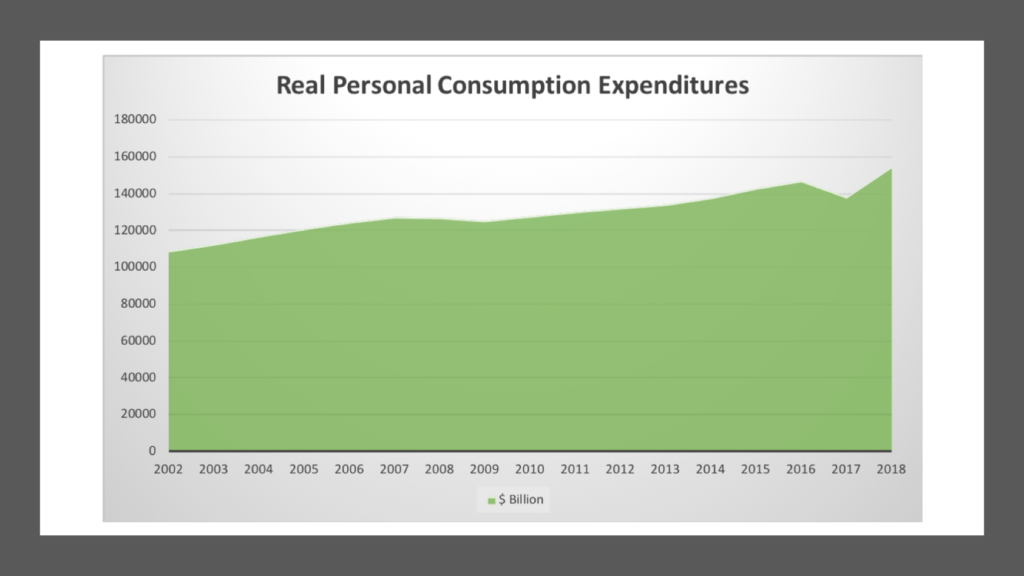
This enormous increase in consumption coincides with the planet’s population growth which increased 30% just between 1990 and 2010! However, as you can see from the data above, consumption is growing faster than the population. In the United States, seasonally adjusted Real Personal Consumption Expenditures increased by 42% between 2002 and 2018.
Consumption And Pollution
Our consumption binge has had significant environmental side effects. All forms of pollution have increased during this period of unprecedented consumption. Our carbon footprint has more than tripled since 1960. Comprehensive, historical air pollution data is available from Our World In Data and it tells the story of our atmosphere’s deterioration.
The fashion industry is not the leading contributor to the world’s pollution but it is a major player. Globally, clothing and footwear account for 5% of personal consumption but 10% of the global carbon footprint. That’s not a good ratio. What’s going on? Clothing sales nearly doubled from 2002 to 2015. The average consumer bought 60% more clothing in 2014 than in 2000 but kept each garment half as long. Positive trends for business growth but not so good for the environment. Let’s look at some specific areas where the fashion industry impacts the environment.
Water Use
Apparel manufacturing and production consumes large amounts of water. It takes 2,700 liters of water to make one cotton shirt. That’s enough water for one person to drink for two and a half years. Put this into a global perspective. Demand for freshwater is increasing by 64 billion cubic meters a year (yes, that’s BILLION). Freshwater withdrawals have tripled over the last 50 years. Fashion contributes to this demand.
Coal Usage
Many apparel manufacturing plants are run on energy produced by coal-fired plants. As mentioned above, global coal consumption has increased tremendously since the ’80s with a corresponding increase in greenhouse gas emissions. Polyester is a popular fabric for shirts and other clothing items. Polyester production requires less water than cotton but has twice the carbon footprint. In 2015, textile polyester production emitted 1.5 trillion pounds of greenhouse gases. That’s the equivalent to the yearly greenhouse gas emissions of 185 coal-fired power plants.
Chemical Production
Clothing manufacturing uses a number of toxic chemicals that find their way into our ecosystem. Alkylphenol compounds used in the cleaning and dyeing process are toxic to aquatic life and persist in the environment and make their way through the food chain. Phthalates are used in artificial leather, rubber, and PVC and in some dyes. They are reprotoxic in mammals. Azo dyes are heavily used by the textile industry. Some azo dyes break down during use and release chemicals known as aromatic amines, some of which can cause cancer.
These are just a few of the harmful chemicals used by the fashion industry. Most of them have been banned by the EU but continue to be used in the countries that produce most of the world’s clothing. As a side note, global chemical production increased by 135% between 1998 and 2009.
The Sticky Issue
Apparel manufacturing clearly has a significant environmental impact. As manufacturing increases so do the negative impact on the environment – and apparel manufacturing is increasing. Clothing sales nearly doubled from 2002 to 2015. In the United States, clothing accounts for 3% of total personal consumption, a percentage that is worth $400 billion.
And now the sticky part. Reducing consumption to reduce pollution will also reduce manufacturing. If apparel prices and production costs remain at current levels, reduced manufacturing will also reduce profits and lead to a slowing economy. Clearly, prices and costs adjustments will be needed to compensate for lower demand. Neither approach will be easy.
How much cost reduction is possible? I suspect that most apparel manufacturers continually look for ways to reduce their costs. How likely are we to see game-changing technologies that have the potential to offset reductions in demand?
Without significant cost reductions, the burden falls on consumers who will be asked to pay higher prices for the fewer garments they purchase. This would require a huge shift in buyer behavior with many psychological and sociological factors. Of course, this applies to all industries, not just fashion.
Given the difficulties in slowing our consumption, are we doomed to become human locusts swarming over our natural resources until they are exhausted? How do we curb destructive consumption without negative economic consequences? I’d love to hear your thoughts.

© 2019 David Biagini, All rights reserved.